In any modern workspace, the role of design in shaping human focus cannot be underestimated. Clarity-anchored design approaches emphasize the elimination of unnecessary distractions while highlighting the elements that truly matter. This philosophy prioritizes simplicity and intentionality, ensuring that users can navigate systems, interfaces, and physical environments with ease and confidence. By reducing visual clutter, providing consistent cues, and organizing information in a logical hierarchy, clarity-anchored design enhances cognitive processing and allows users to engage with content in a purposeful manner. When every component has a clear function and context, the mind can allocate attention efficiently, reducing the cognitive load that often hampers productivity.
A key principle of clarity-anchored design is the use of visual hierarchy to guide perception. This involves prioritizing information based on importance, using size, contrast, and spacing strategically. For example, headings that are bold and prominent immediately signal their relevance, while supporting details are presented with subtler cues. In digital environments, such techniques ensure that users can scan pages quickly, locate necessary tools, and execute tasks without hesitation. Beyond digital applications, physical spaces such as offices, classrooms, and labs benefit from similar structuring. Clear signage, organized layouts, and uncluttered work surfaces foster a sense of order that encourages focus and reduces the mental friction associated with searching for resources or understanding processes.
Consistency is another cornerstone of this approach. When elements are presented predictably, users form mental models that streamline interaction. Buttons, icons, and navigational pathways that follow uniform patterns reduce the need for constant interpretation, allowing attention to remain on the task rather than the interface itself. Inconsistent design, on the other hand, forces frequent cognitive shifts, which can fragment concentration and introduce subtle stressors that diminish overall performance. Standardization does not imply monotony; it ensures that novelty is meaningful rather than distracting, emphasizing points of interaction rather than background noise.
Color usage plays a significant role in clarity-anchored design. By applying color intentionally, designers can guide focus, indicate status, and delineate areas of importance. Limited color palettes prevent overwhelming the viewer, while strategic use of accent hues draws attention to critical actions or alerts. Beyond aesthetics, this approach aligns with principles of perceptual psychology, leveraging innate tendencies in visual processing to facilitate comprehension. For example, warmer tones naturally attract attention, whereas cooler shades recede, allowing designers to prioritize content flow without relying on excessive labels or instructions.
Typography also contributes to improved focus when applied thoughtfully. Legible fonts, appropriate line spacing, and clear differentiation between headings and body text ensure that reading is effortless. Poor typographic choices can lead to eye strain, slowed reading speed, and increased likelihood of error. By emphasizing readability, clarity-anchored design supports sustained engagement, making it easier for users to absorb complex information and maintain concentration over extended periods.
Beyond visual elements, interaction design influences focus by shaping how users engage with content. Reducing unnecessary steps, minimizing interruptions, and providing immediate feedback all contribute to a seamless experience. Predictable responses, such as hover states, animations, or confirmation messages, reinforce understanding without introducing cognitive friction. When users can anticipate the outcome of their actions, their attention remains directed toward objectives rather than managing uncertainties or compensating for ambiguous interfaces.
Clarity-anchored design also incorporates principles of progressive disclosure. By presenting information incrementally rather than all at once, it avoids overwhelming the user with complexity. This allows for focused attention on the current context while providing pathways for deeper exploration as needed. Such techniques are particularly effective in educational tools, dashboards, and productivity software, where the volume of available information can easily exceed the user’s processing capacity. By controlling the pace and visibility of content, designers facilitate a flow state in which users can engage deeply with the material without cognitive overload.
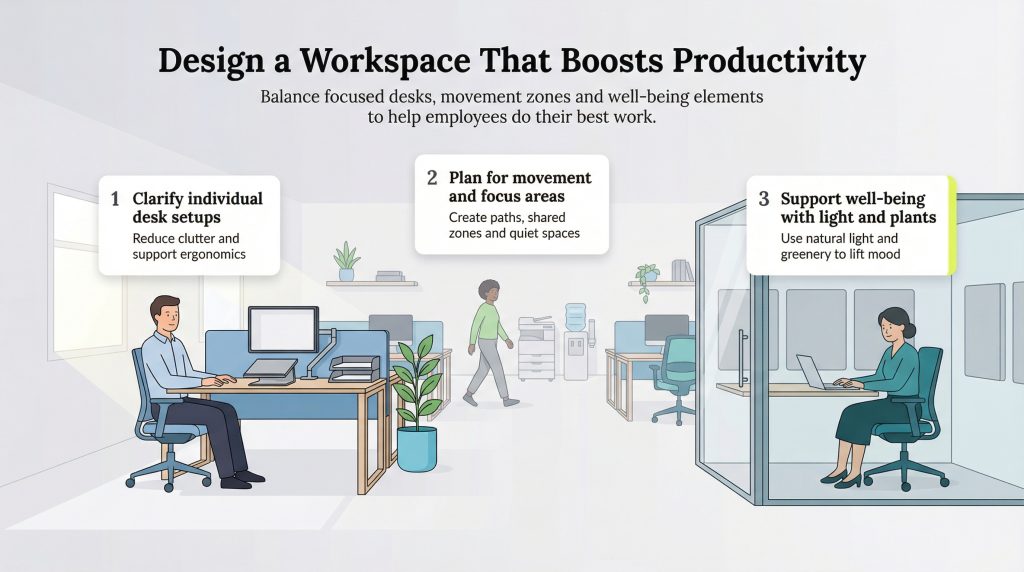
Physical environments benefit from the same principles. Thoughtful spatial organization, controlled lighting, and noise management contribute to cognitive clarity. Environments that minimize distractions, provide clear lines of sight, and emphasize essential tools or information help occupants maintain focus naturally. Even subtle elements, such as furniture arrangement or tactile cues, can reinforce attention pathways by reducing unnecessary movement or decision-making. The alignment of physical and visual design elements ensures a holistic experience where attention is guided smoothly and effortlessly.
User-centered design practices complement clarity-focused approaches by grounding decisions in real-world behavior. Observing how people interact with systems, tools, or environments uncovers friction points that may compromise focus. Iterative testing and feedback loops allow designers to refine layouts, workflows, and visual cues, ensuring that clarity is not assumed but validated. Such empirical grounding distinguishes effective clarity-anchored design from superficial simplicity, embedding functional purpose in every choice.
Finally, the psychological dimension cannot be overlooked. Clarity-anchored design communicates confidence, stability, and trustworthiness. When users perceive an interface or environment as coherent and intentional, they feel more capable and less distracted by uncertainty. This sense of control reduces mental fatigue and allows sustained engagement, enabling tasks to be completed efficiently and accurately. Cognitive science supports this, demonstrating that well-structured environments reduce extraneous cognitive load and enhance working memory, providing measurable benefits for focus, learning, and decision-making.
In sum, clarity-anchored design is not merely about minimalism or aesthetics; it is about purpose-driven structuring that aligns visual, spatial, and interactive elements with human cognition. By prioritizing hierarchy, consistency, color, typography, interaction, and incremental disclosure, designers create experiences that allow users to focus naturally and maintain attention over time. Integrating these principles into digital interfaces, physical spaces, and workflows improves productivity, learning, and overall satisfaction. When executed thoughtfully, clarity-anchored design transforms the way users perceive and interact with their environments, turning potential distractions into seamless pathways of understanding. It encourages deliberate engagement, reduces cognitive strain, and supports both short-term tasks and long-term retention. By harmonizing aesthetics with functionality and embedding psychological insights into every layer, clarity-anchored design ensures that focus is not just possible but intuitive, allowing users to operate at their best without unnecessary friction.
This approach is especially valuable in high-stakes or information-dense contexts. Whether managing complex data, conducting research, or coordinating collaborative efforts, the ability to maintain attention amidst competing demands is critical. Clarity-anchored design provides the scaffolding necessary to support such performance, fostering environments where focus is a natural outcome rather than a constant struggle. Over time, users internalize the cues, forming habits and expectations that further reinforce productive attention patterns. In this way, clarity-anchored design not only improves immediate engagement but also cultivates long-term efficiency and cognitive resilience.
By embedding these principles into every aspect of design—from the arrangement of visual elements to the pacing of information delivery—organizations and creators can offer experiences that respect the user’s cognitive capacity. Focus becomes a built-in feature rather than an external requirement, and clarity guides both perception and action. The result is a seamless, intuitive environment that promotes comprehension, decision-making, and sustained attention, ultimately enhancing effectiveness, satisfaction, and well-being across diverse contexts.


Be First to Comment